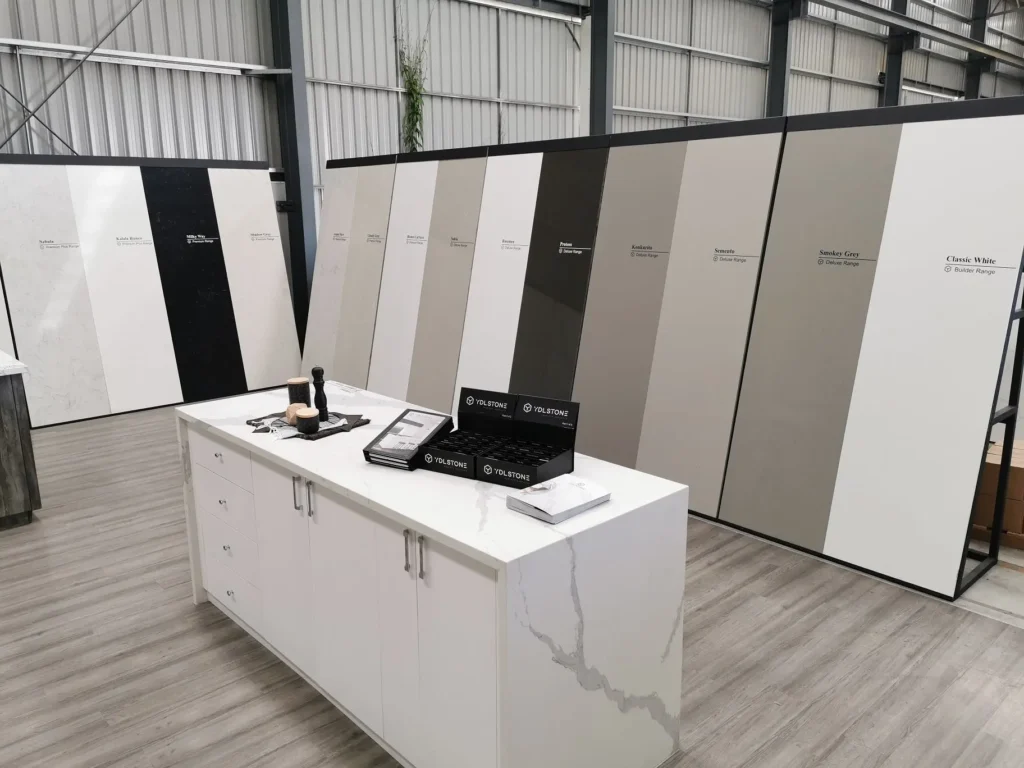
Choosing a kitchen benchtop used to be quick and easy, you picked between a laminate, granite or an engineered stone product and that was it.
Then the industry changed, and for the better. Manufacturers were forced to comply with higher safety standards, changing the benchtop materials they worked with, and making most online advice out of date.
This guide targets the most-searched questions on the internet, and will walk you through what your contemporary options are, which options are suitable for your situation, and one inside point on pricing that most suppliers won’t tell you.
The One Thing You Need to Know First
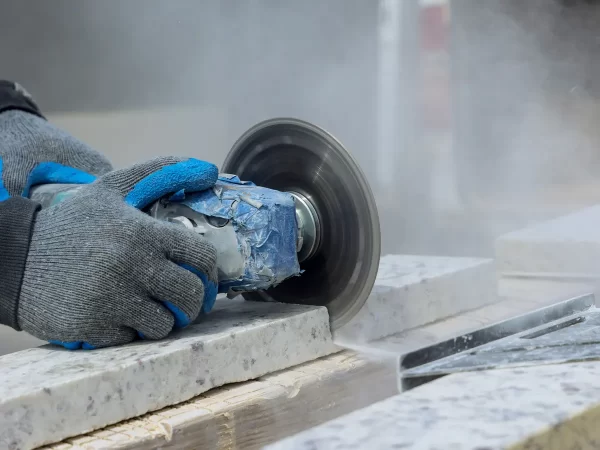
In 2024, traditional engineered stone was banned across Australia. The old products contained as much as 90-95% crystalline silica, and dry cutting or grinding them released a fine dust that would cause silicosis, an irreversible and sometimes fatal lung disease, in the tradespeople fabricating exposed to the dust without the correct PPE.
The ban exists to protect those workers, and it was the right call, no benchtop is worth workers dying for.
What surprises most people is that this did not kill engineered stone, it only pushed the industry to innovate.
Manufacturers, including big names like Caesarstone, now produce zero crystalline silica engineered stone, which delivers the look and performance people love without the silica that made the old product dangerous to fabricate benchtops with.
So if you read any advice that suggests engineered stone has disappeared, know that this advice is outdated. High-silica engineered stone is gone, zero silica engineered stone is just as relevant as ever, and if your existing kitchen has old engineered stone, you do not need to remove it. Once it has been installed, as long as it is not cut or ground, there’s no risk of silicosis.

Which Type of Kitchen Countertop is Best?
The common benchtop materials are compared below, with red indicating materials Brisbane Benchtops doesn’t supply.
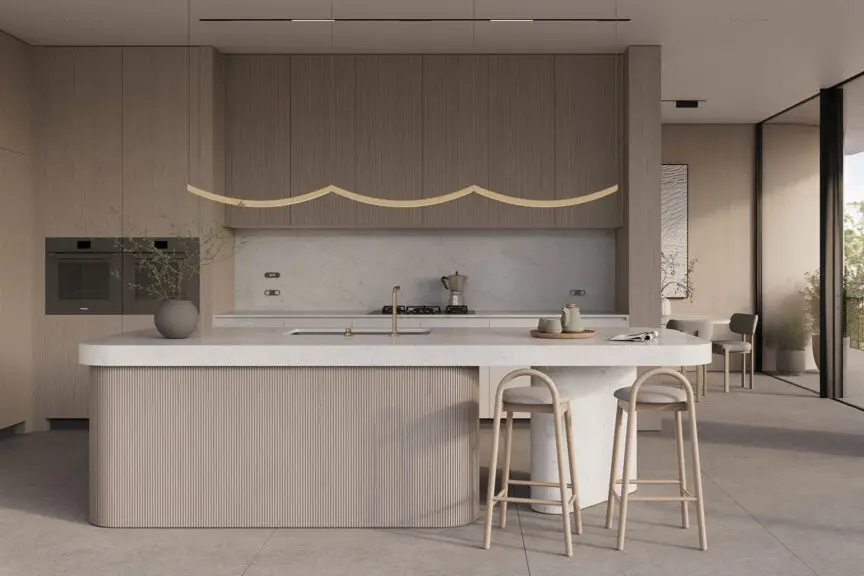
Zero crystalline silica engineered stone, sometimes referred to as mineral stone, is the modern evolution of the engineered stone that dominated Australian kitchens for two decades.
As a man-made product, it can be tightly controlled for colour, thickness and consistency. It’s non-porous, making it stain-resistant, hygienic and easy to clean, and it offers such a huge range of looks, from solid colours to convincing marble veining.
It never needs sealing, and it can be repaired if chipped.
For most kitchens, engineered stone ticks most people’s boxes.
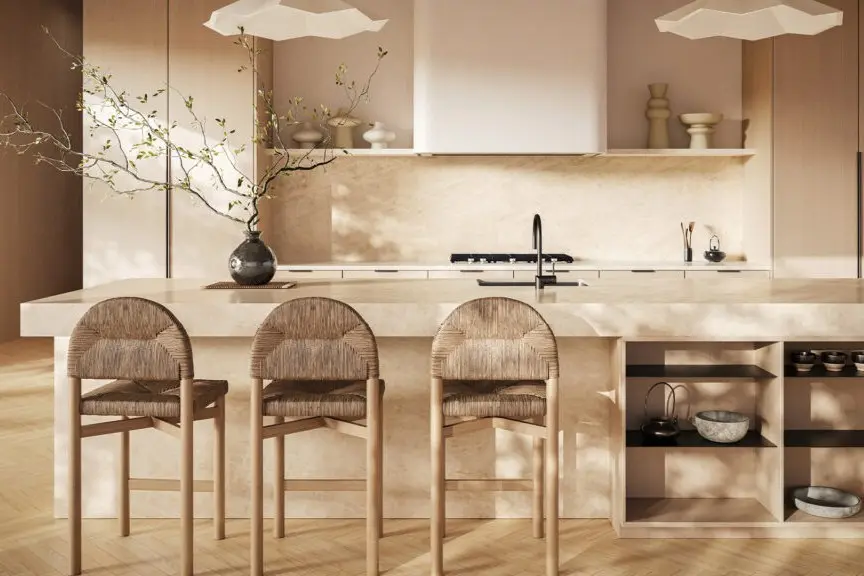
Porcelain and sintered stone are the other modern, silica-safe options.
They are dense, hard, and almost completely non-porous.
Porcelain resists heat, scratching, fading and most stains. Because they are resistant to UV, porcelain benchtops are also appropriate for outdoor use.
The trade-off is that porcelain is harder to fabricate with, making them more expensive ,and thinner slabs can also chip on a sharp edge impact.
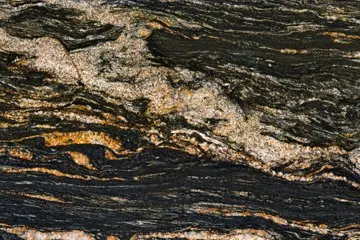
Natural granite is as genuine as it gets.
It is a quarried slab of rock, making every piece unique, heat resistant, and a quality sealed top will outlast the kitchen around it.
The only downsides are that it is expensive, can carry hidden natural faults, and needs periodic sealing to stop oil, wine and spices staining it due to its porosity.
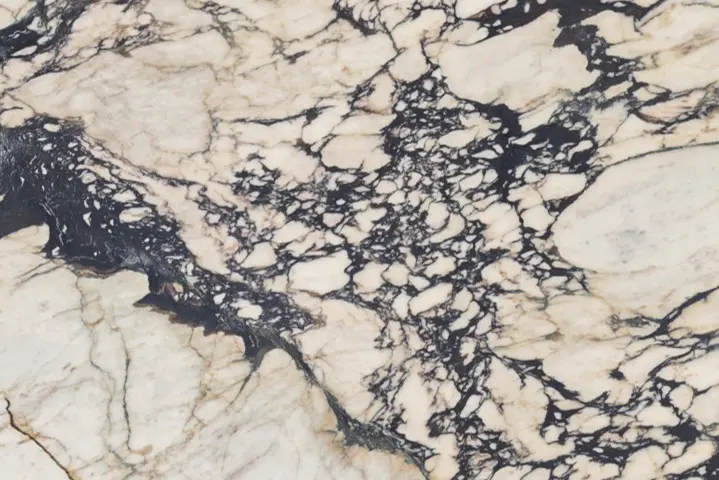
Natural marble has a standout soft, luminous look other materials can’t match and comes at the cost of high maintenance.
It is soft, acid-sensitive and prone to etching from lemon juice, vinegar and red wine.
Suitable if you want something that ages gracefully, but only if you can handle it.
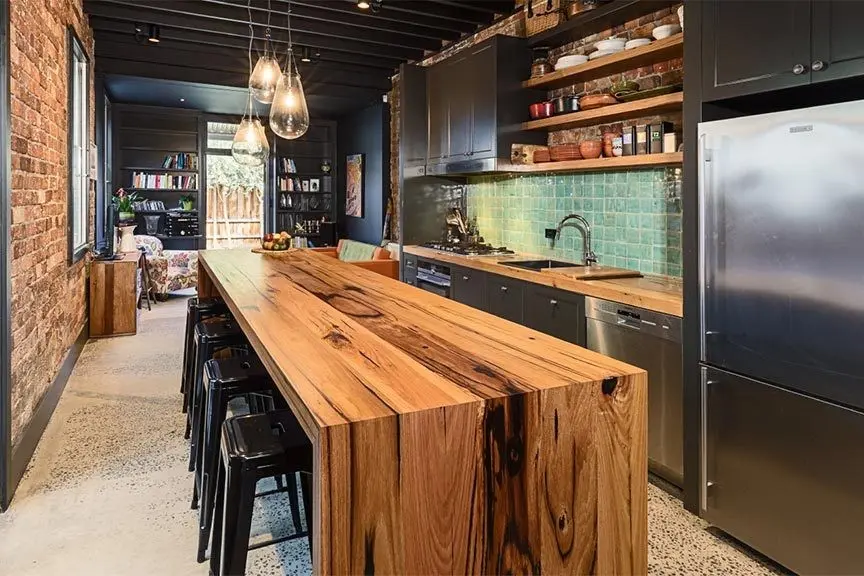
Timber adds warmth and suits Hamptons, country and Scandi kitchens, but needs oiling and dislikes standing water, so it works best as an island or just one section.
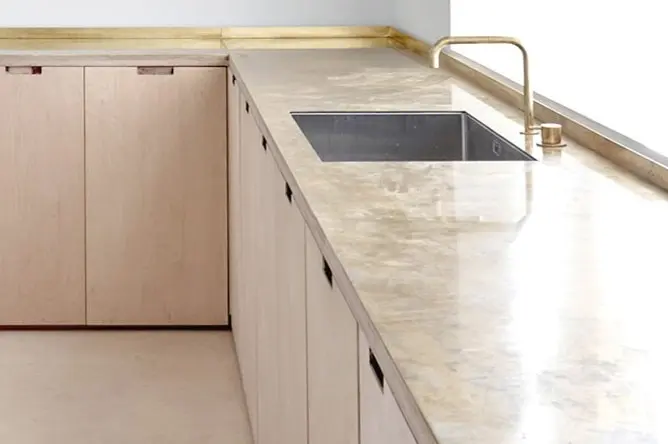
Laminate is the cheapest option, with a huge pattern range and has been very popular in the past.
Most benchtop replacements we replace with engineered stone are laminate surface to begin with.
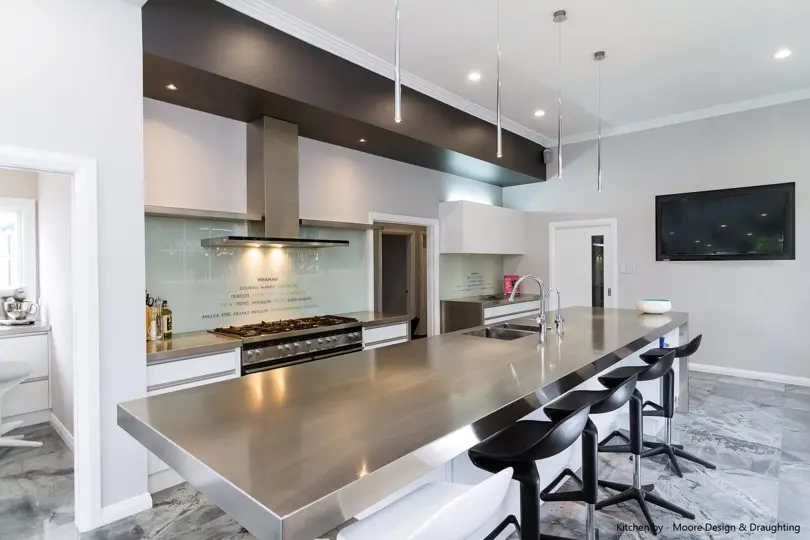
Stainless steel is the epitome of professional cooking.
As you may have already guessed, chefs, commercial places, and even enthusiastic cooks prefer stainless steel because it is resistant to stains and easy to clean.
However, since this benchtop surface is made of steel, it is prone to getting scratches and marks from cutlery and cookware.
“Which is Better, Granite or Caesarstone?”
This is one of the most-searched questions on search engines, so it is worth directly answering, with one clarification.
Caesarstone is a brand of engineered stone whereas granite is its own material. You can get engineered stone from lots of places, not just Caesarstone. To compare engineered stone with granite though; neither is universally better.
Choose engineered stone for consistency, low maintenance, predictable design choice and the ability to repair chips invisibly.
Choose granite if you want a real, natural rock aesthetic with slightly more cost and maintenance.
So this leads us to our next question…
"Why Are People Not Using Granite Countertops Anymore?"
This question is mostly relevant to US customers, not Australian.
Granite has fallen off in the US as engineered quartz has become more trendy. This shift was about style rather than performance.
Plenty of Australians still choose granite, and it remains a suitable option for those favouring durability.
If you read that “nobody uses granite anymore”, note that this is not an Australian trend.
What is the Strongest Benchtop Material?
Depends how you define strength.
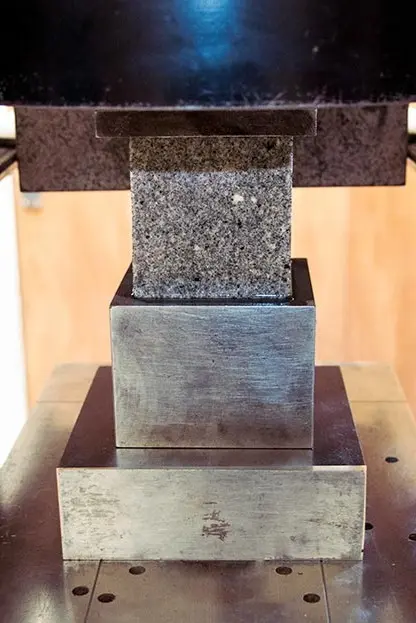
For scratch resistance and hardness, porcelain and sintered stone lead.
For heat resistance, porcelain, granite and stainless steel.
For structural strength, granite is hard to beat.
For best all-round strength, porcelain, as long as you don’t mind the trade-off that it can be brittle at a thin edge.
Just note that for all stone, even the toughest can suffer thermal shock, as if you put a concentrated heat source straight onto the surface, the stone will expand faster than the cold stone around it, and that thermal stress can crack the surface where hot meets cold.
This is what trivets are used for, as thermal cracks are not covered by warranty.
What is the Best Kitchen Benchtop Material in Australia?
For most kitchens, zero crystalline silica engineered stone is the standout.
It is the easiest to live with, never needs sealing, and has the widest range of looks.
If you want maximum toughness or outdoor application, porcelain or sintered stone is the pick.
If you want genuine natural stone, granite is the value choice and marble is the statement choice.
If you are highly price driven, modern laminate gives you the most appearance for the least money, although we do not install this material.
For a unique aesthetic, timber and stainless steel have a place, usually more suited as part of a kitchen rather than the whole thing.
Brisbane Benchtops does not install timber, stainless steel or laminate but we do replace it with our other materials.
How Stone is Actually Priced
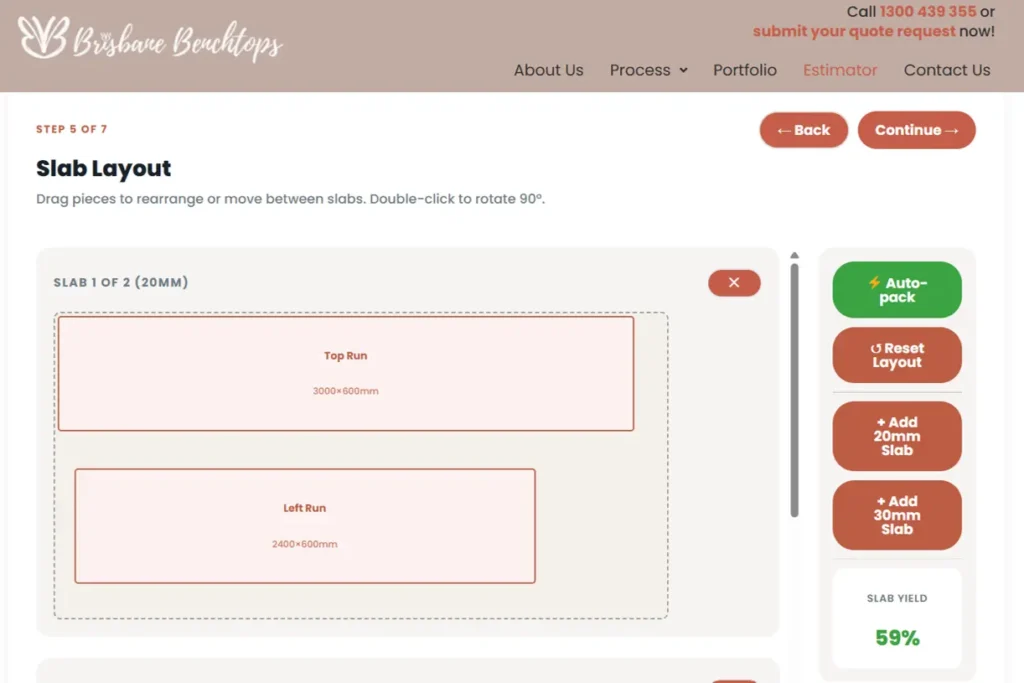
Most building materials are priced per square metre. Stone is priced per slab used. The portion of the slab that you use is called the yield. Whatever’s left is wastage.
For example, if you have one piece that is 700mm x 1500mm, and a standardised slab is roughly 1600mm x 3200mm slab, you have 20.5% yield, and 79.5% wastage.
You could fit another large piece on that slab and more smaller pieces, and pay for the same price, as long as it all fits on one slab.
This makes maximising yield a high priority if you want to get the highest value for money. You could use the wastage for cutting boards, a coffee table or anything else!
Choosing Well
The benchtop is one of the few things in a kitchen you touch every day for fifteen or twenty years, so choose deliberately rather than by trend.
See a full slab or a large sample in person rather than relying on a small chip, since small samples never show how a stone reads at scale. And talk through your layout with a fabricator early, because slab size, join placement, thickness and edge profile all affect both the look and the final price. A good fabricator will tell you when a cheaper option would serve you just as well.
If you would like help working out which material suits your kitchen and your budget, the team at Brisbane Benchtops measures, fabricates and installs across Brisbane, working with zero crystalline silica engineered stone, porcelain and natural stone.
If you’re ready to build your dream kitchen, submit a quote request through our streamlined form today.
Or if you are still in the research phase and just want a quick estimate, check out our Estimator tool.